Caregivers

Assisted eating

How to offer, supervise, and adapt mealtime with safety and respect.

Safety note
This content is educational. Do not change food texture, liquids, medication routines, or exercises without professional guidance.
Related articles

Read within this subcategory

Back to center
Caregiver offering food with a spoon to an older adult seated during assisted eating
Caregiving

Spoon, cup, and straw in dysphagia: assisted eating precautions

Learn how spoons, cups, straws, and other utensils may affect assisted eating for people with dysphagia, without improvising care.

Read article


Caregiver and older adult at the table, calm unhurried meal, respecting pace and autonomy
Caregiving

How to help an older adult with dysphagia eat without forcing

Learn how caregivers can support eating without forcing, while preserving autonomy, communication, safety, and signs to pause.

Read article
Older adult seated with caregiver support to drink water safely
Caregiving

Can an older adult drink water while lying down?

Learn why drinking water while lying down may increase choking risk in older adults and how to offer fluids more safely.

Read article
Caregiver safely offering food to a bedridden older adult
Caregiving

How to safely offer food to a bedridden older adult

See how posture, pace, alertness, and warning signs matter when offering food to a bedridden older adult.

Read article
Caregiver supervising a meal for an older adult with dysphagia
Caregiving

How to supervise meals for an older adult with dysphagia

See how caregivers can supervise meals with respect, safe pacing, posture, and attention to warning signs.

Read article
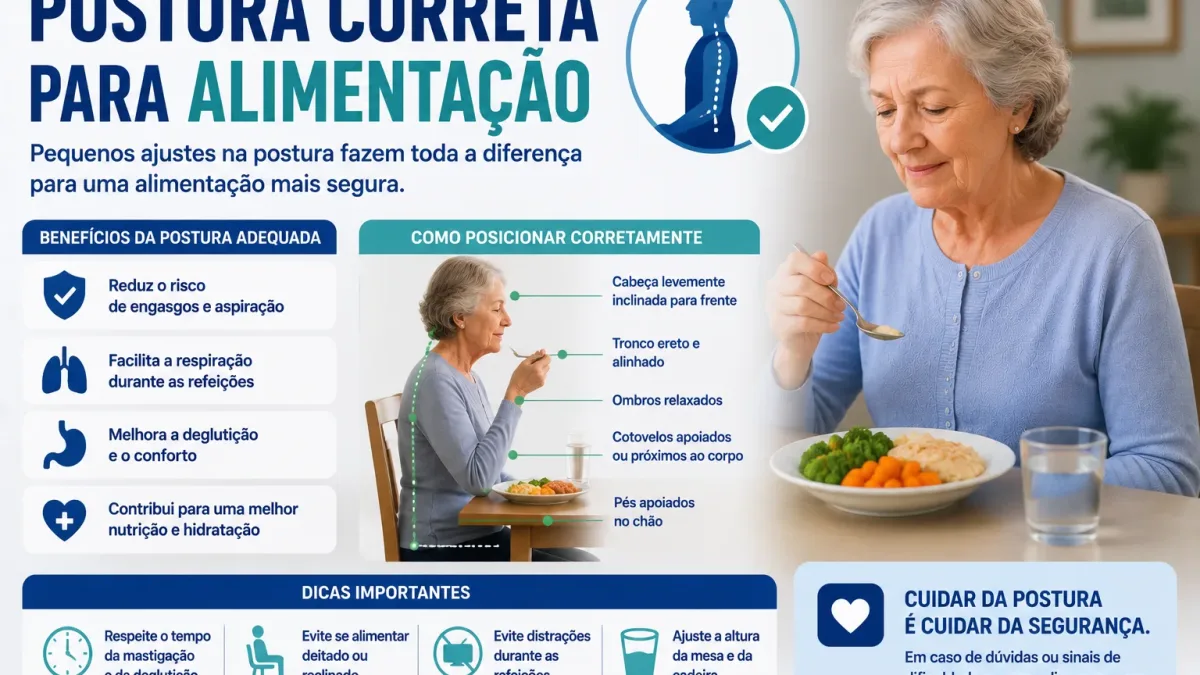
Caregivers helping with correct posture during eating
Caregiving

Eating posture: how caregivers can support safer meals

Learn how to position someone for meals, which signs suggest posture adjustment, and when caregivers should seek guidance.

Read article

Related subcategories