
Dysphagia

Assessment and follow-up

When to seek help, the role of speech-language pathologists, and limits of exercises or strategies without assessment.

Safety note
This content is educational. Do not change food texture, liquids, medication routines, or exercises without professional guidance.
Related articles

Read within this subcategory

Back to center
A healthcare professional speaks with a patient beside a model of the esophagus and stomach
Dysphagia

Tests for esophageal dysphagia: endoscopy, barium esophagram and manometry

Understand what upper endoscopy, barium esophagram and esophageal manometry assess, and what to ask about preparation and results.

Read article

An older adult talks with a healthcare professional in a room with imaging equipment
Dysphagia

VFSS and FEES: what to expect from swallowing assessments

Understand how VFSS and FEES differ, what they cannot show, and what to ask about preparation, findings and your individual follow-up plan.

Read article
Professional guidance about swallowing exercises and dysphagia
Dysphagia

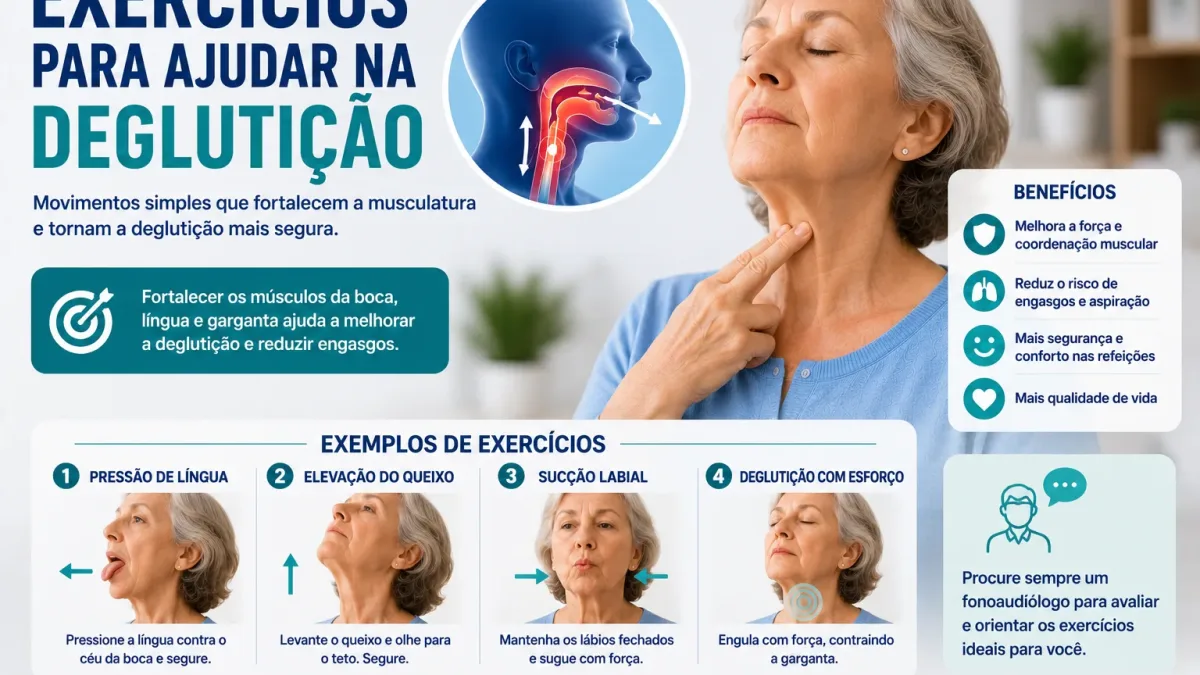
Swallowing exercises: why not to copy them without assessment

Learn when exercises may help dysphagia, why generic videos or lists can be unsuitable, and which warning signs to monitor.

Read article
Speech-language pathologist assessing a person with dysphagia and swallowing difficulty
Dysphagia

Speech-language pathologist and dysphagia: assessment and follow-up

Learn the role of speech-language pathologists in dysphagia, which signs lead to assessment, and how follow-up guides safety and rehabilitation.

Read article
Professional guiding assessment for swallowing difficulty and dysphagia
Dysphagia

When to seek help for swallowing difficulty: signs and urgency

Learn when swallowing difficulty requires urgent care, scheduled assessment, or speech-language pathology evaluation, and what signs to record.

Read article

Related subcategories